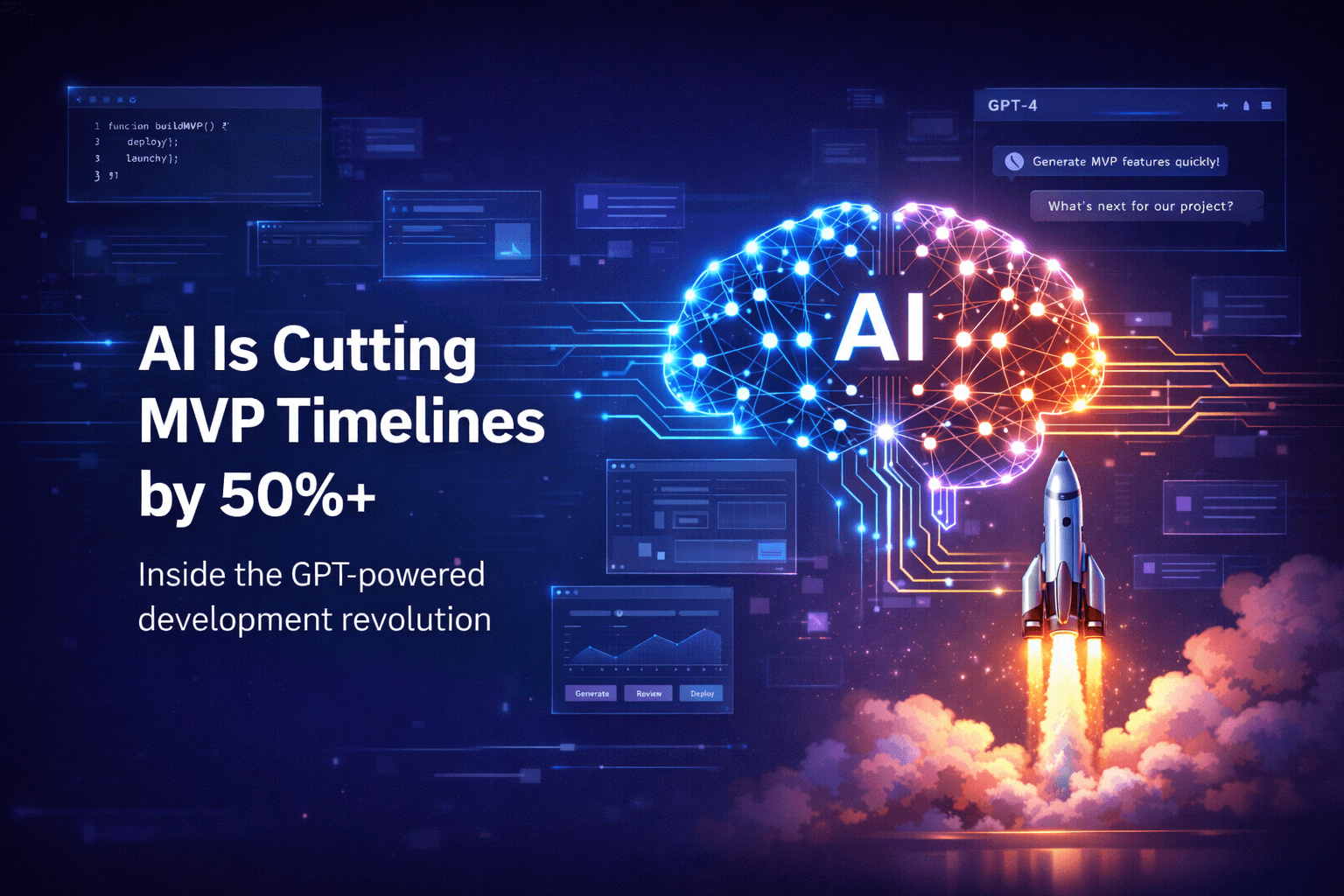
Application development is in the midst of a structural shift that goes beyond frameworks and tooling choices. The fundamental assumptions about what an app is, a static interface through which users navigate to accomplish defined tasks, are being challenged by AI-native design patterns, edge computing capabilities, and user expectations shaped by conversational interfaces. For development teams and product owners at UK businesses, understanding these trends is essential for making investment decisions that will age well.
AI-Native User Experience Design
The most significant shift in application design is the move toward AI-native UX patterns. Rather than presenting users with menus, forms, and predefined workflows, AI-native applications allow users to express intent in natural language and adapt their interface dynamically to match. This is not simply adding a chatbot to an existing application, it requires rethinking the information architecture from the ground up.
Practically, this means designing applications that can infer user goals from partial inputs, surface contextually relevant information without requiring navigation, and adapt their behaviour based on individual usage patterns. The implementation technology, large language models, retrieval-augmented generation, semantic search, is increasingly accessible, but the design challenge of making these capabilities feel natural and trustworthy remains significant. Development teams investing in AI-native UX competence now are building capabilities that will define product quality standards in the next three years.
Edge-Side Rendering and Performance Architecture
Application performance has always mattered, but the proliferation of mobile users on variable network connections has made it more consequential than ever. Edge-side rendering, executing rendering logic at CDN edge nodes geographically close to the user, rather than at a central origin server, is becoming the default architecture for performance-critical applications. Frameworks like Next.js with edge runtime, Cloudflare Workers, and Vercel's edge network make this pattern accessible to development teams without specialist infrastructure expertise.
The performance benefits are substantial: time-to-first-byte reductions of 50 to 80 per cent are achievable for many applications, translating directly into improved conversion rates and user retention. For UK businesses serving users across diverse geographic and network contexts, investing in edge-native architecture is increasingly a competitive necessity rather than a premium engineering choice.
Cross-platform development with React Native, Flutter, and similar frameworks continues to mature, making it increasingly viable to maintain a single codebase that delivers near-native experience on iOS, Android, and web. Combined with improved AI-assisted development tooling that accelerates code generation and testing, the cost of building high-quality multi-platform applications continues to fall, creating opportunities for UK businesses that have previously considered custom app development cost-prohibitive. Our Cross-Platform Development and App Development services at SAM AI Solutions are designed to deliver exactly these outcomes.
SAM AI Solutions Editorial Team
SAM AI Solutions